Humans Just Flew Around the Moon Again — Here’s Everything That Happened
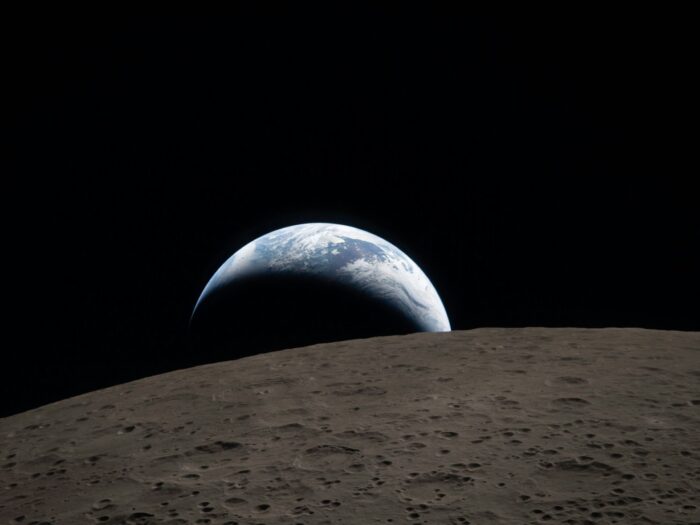
On April 1, 2026, four astronauts strapped into NASA’s Orion spacecraft and did something no human had done in over 50 years: they left low-Earth orbit and headed for the Moon. The mission was called Artemis II, and it was the first crewed test of NASA’s deep-space hardware since the final Apollo flight in 1972.
No one walked on the lunar surface this time — that’s saved for Artemis III. But Artemis II proved that the Space Launch System (SLS) rocket and Orion capsule can safely carry a human crew around the Moon and bring them home. Here’s the full breakdown.
Meet the Artemis II Crew
- Reid Wiseman — Mission Commander (NASA)
- Victor Glover — Pilot (NASA) — the first Black astronaut assigned to a lunar mission
- Christina Koch — Mission Specialist (NASA) — the first woman assigned to a lunar mission
- Jeremy Hansen — Mission Specialist (CSA) — the first non-American to fly beyond low-Earth orbit
The Long Road to Launch: A Timeline
Artemis II didn’t launch on its first, second, or even third target date. The mission slipped several times in early 2026, and each delay tells you something about how unforgiving deep-space hardware is:
- February 2, 2026 — NASA ran a “wet dress rehearsal,” loading 700,000 gallons of liquid hydrogen and oxygen into the rocket to simulate a full countdown. The test surfaced multiple hydrogen leaks and communication dropouts.
- February 6–8, 2026 — Cold weather and high winds at Kennedy Space Center pushed potential launch attempts back further.
- Late February 2026 — Engineers discovered a helium flow problem feeding the SLS rocket’s upper stage. Helium pressurizes the fuel tanks and purges leftover propellant, so a fault here isn’t something NASA could fly through. The rocket was rolled back into the Vehicle Assembly Building for repairs.
- March 20, 2026 — A repaired SLS rocket rolled back out to the launch pad, targeting an April window.
- April 1, 2026 — Artemis II finally launched at 6:24 p.m. EDT.
None of this is unusual for a first-of-its-kind crewed vehicle. NASA would rather scrub a launch a dozen times than risk a crew on hardware that hasn’t been triple-checked.
Launch Day: What Actually Happened
Artemis II lifted off from Launch Complex 39B at Kennedy Space Center in Florida on April 1, 2026, at 6:24 p.m. EDT, after a countdown that had been delayed several times earlier in the year due to a helium flow issue and rehearsal problems. Once clear of the tower, the SLS rocket sent Orion and its crew on a roughly 10-day journey: a loop around the Moon without entering lunar orbit, followed by a high-speed return and splashdown in the Pacific Ocean.
Along the way, the crew tested Orion’s life-support systems with people aboard for the first time — everything from air and temperature control to food and waste management — data NASA needs before it can risk a longer lunar landing mission.
Why This Mission Actually Mattered
It’s easy to shrug this off as “just a flyby,” but Artemis II answered questions no simulation can:
- Can Orion keep a crew alive? This was the first real-world test of Orion’s life support with astronauts inside.
- Does the hardware work at scale? SLS and Orion had only flown together once before, uncrewed, on Artemis I in 2022.
- Is NASA ready for a landing? Every system validated here reduces risk for Artemis III, which aims to actually put boots back on the Moon.
What’s Next: Artemis III and Beyond
NASA has since restructured the next mission. Artemis III, now targeted for late 2027, will no longer attempt an immediate lunar landing. Instead, a crew will dock Orion with commercial landers from SpaceX and Blue Origin while still in Earth orbit — a dress rehearsal before the actual Moon landing, which has been pushed to Artemis IV in early 2028.
In other words: Artemis II proved humans can safely go around the Moon again. Artemis III will prove the landing hardware works. Artemis IV is when boots finally hit lunar soil.
Artemis II vs. Apollo: How Do They Compare?
It’s tempting to call Artemis II “Apollo 2.0,” but the missions had different jobs. Apollo 8 (1968) was the original crewed lunar flyby, and Apollo 17 (1972) was the last time humans landed on the Moon. Here’s how Artemis II stacks up:
- Crew size: Apollo capsules carried 3 astronauts. Orion carries 4.
- Technology: Apollo’s guidance computer had a fraction of the processing power of a modern calculator. Orion runs on radiation-hardened flight computers with modern life-support automation.
- Mission goal: Apollo 8 was a flyby proving the concept was possible at all. Artemis II was a flyby proving 2020s-era hardware — built after a 50-year gap — actually works with people inside it.
- Diversity of crew: Apollo crews were exclusively American men. Artemis II included the first woman and the first person of color assigned to a lunar mission, plus the first non-American to fly beyond low-Earth orbit.
The comparison matters because Artemis isn’t trying to recreate Apollo — it’s trying to build a permanent, repeatable system for going back and forth to the Moon, rather than a handful of one-off flags-and-footprints missions.
Fast Facts for Quiz Night
- Artemis II was the first crewed lunar mission since Apollo 17 in 1972.
- The mission lasted approximately 10 days.
- Christina Koch became the first woman ever assigned to a lunar mission.
- Jeremy Hansen became the first Canadian — and first non-American — to fly beyond low-Earth orbit.
- Orion splashed down in the Pacific Ocean at the end of the mission.
Frequently Asked Questions
Did Artemis II land on the Moon?
No. Artemis II was a flyby mission — the crew looped around the Moon without landing. The first crewed landing is planned for Artemis IV.
How long did Artemis II take?
About 10 days from launch to splashdown.
Who was on board?
NASA astronauts Reid Wiseman, Victor Glover, and Christina Koch, plus CSA astronaut Jeremy Hansen.
When is the next Moon landing?
NASA is now targeting Artemis IV, expected in early 2028, for the first crewed lunar landing since Apollo. Artemis III, planned for late 2027, will test docking with lunar landers in Earth orbit first.
Why didn’t Artemis II land on the Moon?
Artemis II never carried a lunar lander — Orion isn’t designed to touch down on the surface. Its job was to prove the rocket and capsule could safely carry humans around the Moon and back before NASA risks an actual landing mission.
How far did the crew travel?
Orion traveled roughly 4,600 miles beyond the far side of the Moon at its farthest point, putting the crew farther from Earth than any humans since Apollo 13 in 1970.
Was Artemis II livestreamed?
Yes. NASA broadcast the launch, key mission milestones, and splashdown live on NASA+ and its official channels, with regular blog updates throughout the 10-day flight.
Why did the launch get delayed so many times?
A combination of a hydrogen leak found during a rehearsal test, bad weather at Kennedy Space Center, and a helium flow issue in the rocket’s upper stage pushed the launch from an original 2025 target into April 2026.